
Table of Content:
In economics, knowing how much output comes from inputs is essential for looking at how well things are produced, controlling costs, and making choices. Marginal Product (MP) is a key idea for measuring this connection. It helps economists, business owners, and managers see how changing the amount of inputs affects the total amount produced. MP is very important in theories about production, studies of labor, and planning operations.
This paper will fully examine marginal product, covering what it is, how to calculate it, its underlying conditions, different phases, examples from the real world, how it connects to other production ideas, and its significance in business and economics.
Marginal Product (MP) is the extra amount created when you add just one more unit of an input, while holding all other inputs steady. Typically, when people talk about marginal product in economics, they're referring to the Marginal Product of Labor (MPL), which is about adding more workers. But this idea also applies to other production factors like money, property, and basic supplies.
In simple terms, marginal product answers the question:
How much extra output do we get by adding one more unit of input?
-->For example, if hiring one additional worker increases total production from 100 units to 110 units, the marginal product of labor is 10 units.
The general formula for Marginal Product (MP) measures the additional output produced by a change in the quantity of input used.
Marginal Product (MP) =
ΔTP ÷ ΔInput
Where:
Example:
If total output increases from 200 units to 240 units after employing one additional worker:
MP = (240 − 200) ÷ 1 = 40 units
This means the marginal product of that worker is 40 units.
The idea of marginal product, which shows how much extra is made when one more adjustable input is used, relies on a few main economic beliefs. These beliefs allow economists to study how things are made in a simple and controlled way, especially in the short term. Knowing these beliefs is important to properly understand what marginal product is and why it acts the way it does.
Marginal product is primarily a short-run concept, where at least one factor of production (such as land, machinery, or factory size) is fixed. Only one input usually labor is varied. This assumption allows economists to observe how changes in a single input affect output while other production conditions remain unchanged.
It is assumed that all units of the variable input are identical in quality and efficiency. For example, each worker added to production is assumed to have the same skill level and productivity. This ensures that any change in output is due to the number of inputs used, not differences in their quality.
When technology is considered constant, it means that the ways things are made, the tools used, and the processes followed do not change during the study. This helps to see only how a changing input affects the final product, without any confusion from new inventions or better methods.
Marginal product analysis assumes that inputs are initially used efficiently, meaning resources are optimally combined. At lower levels of input usage, better utilization of fixed factors may lead to increasing marginal returns before diminishing returns set in.
To correctly determine the additional output from one more unit of input, you must alter just one input at a time, keeping all other inputs unchanged. This assumption, that everything else stays the same, is essential for figuring out exactly how much the changed input adds to the total production.
The Marginal Product of Labor measures the increase in output resulting from hiring one additional worker, while keeping other inputs constant.
Example:
MPL of the third worker = 130 − 100 = 30 units
MPL helps firms decide:
Marginal Product (MP) is the extra amount of goods made when you add one more of a specific resource, assuming all other resources stay the same. This is a very important idea in the study of how things are made, as it helps companies, experts, and government officials see how changing the resources used affects the total amount produced. The idea of marginal product is key for making choices about production, pay, expenses, and the economy's growth over time.
Marginal product illustrates how the overall amount produced changes when one more unit of workers, machinery, or other resources is introduced into making something. At first, marginal product generally rises because resources are used more effectively and workers can focus on specific tasks. But eventually, it begins to fall due to too many resources in one place or a shortage of constant resources, which is known as the law of diminishing returns. This understanding assists businesses in figuring out the perfect amount of resources to use to get the most out of what they make without being wasteful.
In the field of economics, how much people earn is directly connected to how much extra value their work adds. The idea that pay is based on marginal productivity suggests that what employees get paid reflects the additional worth they bring to their company. If the extra value a worker creates is significant, businesses are prepared to offer better salaries. This connection helps us understand why pay varies between different businesses, levels of expertise, and locations. It also helps companies figure out how many employees to take on at a certain pay level.
The amount produced by adding one more unit is directly linked to how much it costs to make things. If you produce more with each extra unit, the cost of making one more item usually goes down. But if you produce less with each extra unit, the cost of making one more item goes up. By looking at how much more they produce with each extra unit, companies can better understand their expenses, manage what they spend on making things, and decide on prices that are competitive.
To earn the most money and avoid waste, it's very important to use resources well. Marginal product assists companies in choosing how to divide their limited resources among various tasks. Businesses can move resources to areas that produce more by looking at the marginal product of different things they use. This makes sure they use the best mix of inputs and boosts how much they produce overall.
Marginal product is a main method for looking at how well things are made and how the economy grows. Over time, better technology, abilities, and resources make each additional unit of input produce more, which results in more goods and services and a growing economy. Government leaders use this analysis to create plans that improve how much is produced, create jobs, and ensure lasting growth.
Marginal product is closely related to Total Product (TP) and Average Product (AP).
| Total Product (TP) | Average Product (AP) | Marginal Product (MP) | Key Relationship |
|---|---|---|---|
| Total product is increasing at an increasing rate | Average product is rising | MP > AP | When marginal product is greater than average product, average product rises |
| Total product is increasing at a decreasing rate | Average product reaches its maximum | MP = AP | When marginal product equals average product, average product is at its maximum |
| Total product continues to increase but at a slower rate | Average product starts falling | MP < AP | When marginal product is less than average product, average product falls |
| Total product reaches its maximum | Average product is declining | MP = 0 | When marginal product becomes zero, total product is at its maximum |
| Total product starts declining | Average product continues to fall | MP < 0 | When marginal product is negative, total product declines |
Increasing marginal product occurs when each additional unit of input contributes more output than the previous unit.
Why it happens:
Example:
When a warehouse hires its first few workers, productivity rises quickly because tasks are divided efficiently one handles inventory, another packing, another dispatch.
Key takeaway:
At this stage, adding more input improves efficiency and lowers per-unit production costs.
Constant marginal product occurs when each additional unit of input adds the same amount of output as previous units.
Why it happens:
Example:
Adding delivery staff in a logistics operation where space, vehicles, and systems are perfectly aligned results in consistent output per worker.
Key takeaway:
Production is stable, and efficiency is maintained, but no further gains are achieved from additional inputs.
Diminishing marginal product occurs when each additional unit of input adds less output than the previous unit.
Why it happens:
Example:
Hiring too many workers in a warehouse with limited space leads to congestion, slowing operations and reducing output per worker.
Key takeaway:
This stage signals inefficiency and rising operational costs.
Negative marginal product occurs when adding an extra unit of input reduces total output.
Why it happens:
Example:
Too many workers in a packing area may create confusion, errors, and delays, reducing overall productivity.
Key takeaway:
At this stage, reducing inputs improves output and efficiency.
One of the most important principles associated with marginal product is the Law of Diminishing Marginal Returns.
As more and more units of a variable input are added to fixed inputs, the marginal product of the variable input will eventually decline.
Initially, adding more workers may increase efficiency due to specialization and better utilization of fixed resources. However, after a certain point, overcrowding, coordination issues, and limited capital reduce productivity.
In a small factory:
Production is commonly divided into three stages based on marginal product behavior:
Marginal product is inversely related to marginal cost (MC).
This inverse relationship exists because:
Marginal product plays a crucial role in managerial and economic decision-making:
Firms hire additional workers as long as:
Value of Marginal Product (VMP) ≥ Wage rate
Marginal product helps allocate resources efficiently across different production processes.
Businesses use MP to:
Profit-maximizing firms compare marginal product with input costs to determine optimal production levels.
Value of Marginal Product (VMP)
The Value of Marginal Product measures the monetary value of the additional output produced by one more unit of input.
VMP = Marginal Product × Price of Output
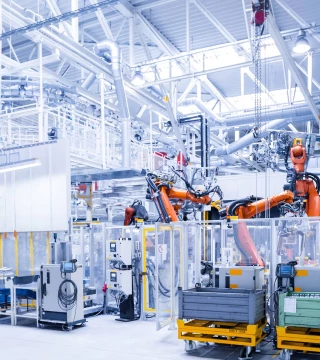
Output rises as workers are added until machine capacity limits productivity.
More labor raises crop yield up to a point on fixed land.

Extra workers speed orders initially, but congestion lowers efficiency.

Developers boost output early; coordination reduces gains later.
Marginal product is a basic economic idea showing how much output changes when you add one more unit of input. This concept helps businesses produce more efficiently, keep expenses down, and earn the most money. It's also key to important economic rules like the law of diminishing returns and how factors of production are priced. Knowing about marginal product helps companies and governments wisely distribute resources, hire workers, and make production more effective. Even with its simplified assumptions and drawbacks, marginal product is still a very useful and common tool in economic studies.
1. What is marginal product in economics?
Marginal product is the additional output produced by adding one more unit of an input while keeping other inputs constant.
2. What is the formula for marginal product?
Marginal product = Change in total output ÷ Change in input.
3. What happens when marginal product is zero?
Total product reaches its maximum level.
4. What is the difference between marginal product and average product?
Marginal product measures additional output, while average product measures output per unit of input.
5. Why does marginal product decline?
Due to the law of diminishing marginal returns caused by fixed inputs.
6. What is marginal productivity theory of distribution?
Marginal Productivity Theory of Distribution explains how income is shared among different factors of production like land, labour, capital, and entrepreneurship.
In simple words, each factor is paid according to the extra output (additional value) it adds to production.
For example:


